Recycling and Sustainability for Landscaping Queens Park
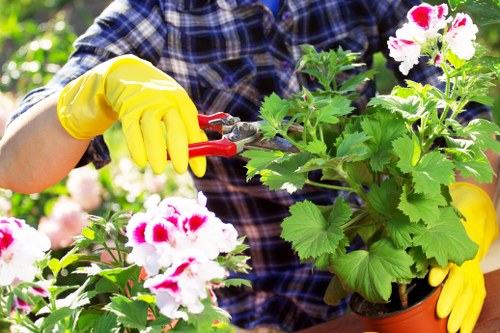 At Landscaping Queens Park, sustainability is built into the way outdoor spaces are planned, maintained, and renewed. Our approach to Queens Park landscaping recycling focuses on reducing waste at every stage of a project, from the first site clearance to the final clean-up. We aim to keep as much material as possible in circulation, with a recycling percentage target of 85% for reusable green waste, inert materials, and suitable packaging. That means prioritising separation on site, careful sorting, and responsible routing of waste to the right local facilities rather than sending everything to general disposal streams.
In practice, this starts with better material recovery. Soil, turf, branches, leaves, and selected hard landscaping offcuts can often be separated and treated differently. In many boroughs across the Queens Park area, waste separation is increasingly organised by material type, and we align our procedures with that borough-based approach to waste sorting. For example, green waste is kept distinct from aggregates and timber, while cardboard, plastics, and metal packaging are isolated where suitable. This helps support cleaner recycling outcomes and reduces contamination, which is one of the biggest barriers to high-quality reuse.
 We also work with local transfer stations that can process landscaping waste efficiently and responsibly. Depending on the material stream and the nearest route, this may include facilities serving Queens Park and surrounding borough collection networks, where green waste can be handled for composting or mulching, and inert waste can be directed toward aggregate recovery. Using local transfer stations shortens transport distances, lowers emissions, and improves traceability. For Queens Park garden recycling, that local handling matters: it gives us more control over how waste is separated, weighed, and directed into the most sustainable route available.
Our recycling programme also includes partnerships with charities and community organisations. Items that are still in usable condition, such as planters, timber offcuts, hand tools, pots, and surplus decorative materials, are assessed for donation before anything is sent for processing. Where appropriate, these materials are passed on to charities that support community gardens, local training schemes, or household re-use initiatives. This not only extends the life of useful items but also supports landscaping sustainability in Queens Park by keeping good-quality materials out of the waste stream and in the hands of groups that can benefit from them.
We pay close attention to low-carbon logistics as well. Our fleet includes low-carbon vans that are chosen to reduce fuel use and emissions on short urban journeys. These vehicles are especially effective in residential streets and mixed-use neighbourhoods where frequent travel between sites, depots, and transfer stations is often necessary. By using more efficient vans, planning routes carefully, and consolidating loads, we reduce the carbon cost of everyday operations. This is a practical part of recycling-focused landscaping, because even excellent waste separation can be undermined if transport is inefficient.
In addition, we consider the wider material lifecycle of every project. When replacing planting beds, edging, paving borders, or old timber structures, we look for options that support reuse or recycling from the outset. This may mean choosing materials that can be recovered later, avoiding mixed-material assemblies that are difficult to separate, or selecting products with recycled content. In boroughs where waste separation rules are becoming more detailed, these decisions make a real difference. They help ensure that Queens Park landscaping projects are designed not just for appearance, but also for recovery at the end of their service life.
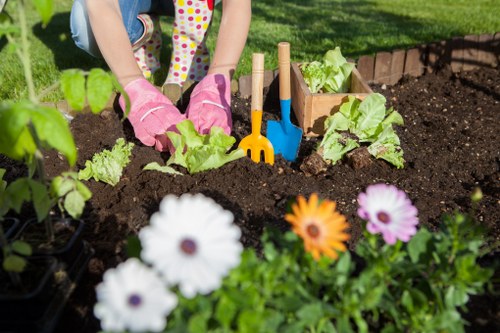 Green waste is one of the most important streams in our work. Branches, hedge trimmings, grass cuttings, and leaf litter are collected separately so they can be composted or turned into mulch where possible. This is especially relevant in an area like Queens Park, where many properties feature mature planting, regular maintenance cycles, and seasonal garden clearance. By treating green waste as a resource, Landscaping Queens Park recycling helps return nutrients to the system rather than treating organic matter as landfill-bound waste.
We also encourage careful handling of hard landscaping waste. Broken slabs, concrete, bricks, gravel, and certain stone materials can often be sorted and routed for crushing or aggregate recovery. Timber from old sleepers or fencing may be suitable for material recovery if it is untreated, while treated wood is handled separately in line with disposal rules. This type of separation reflects the boroughs’ growing emphasis on clear waste streams, where cleaner material is easier to process and more likely to be recycled into new applications.
Packaging waste from deliveries and site operations is another area where improvements add up quickly. Cardboard, plastic wrapping, metal fixings, and pallet components are managed so that recyclable items are captured before general disposal. Our aim is to make recycling a routine part of the working day, not an afterthought. That attitude supports a lower-impact version of Queens Park garden services, one that reduces waste at source, treats materials with care, and contributes to a more circular local economy.
 Looking ahead, our sustainability strategy is based on continuous improvement. We review the proportion of material diverted from disposal, monitor how well waste streams are separated, and identify opportunities to increase reuse and recycling rates across different types of projects. The target remains a minimum 85% recycling and recovery rate, with the long-term ambition of going even further where local infrastructure allows. In practical terms, that means stronger partnerships with transfer stations, greater use of low-carbon transport, and more charitable re-use of salvageable items.
Queens Park’s landscaping sector operates in a setting where borough-level waste systems, local collection routes, and community expectations all influence what is possible. By working within those realities and making better choices at each stage, we can support cleaner recycling outcomes and lighter environmental impact. From soil and green waste to timber, packaging, and reusable garden materials, every stream is considered carefully. This is what makes recycling in Landscaping Queens Park more than a box-ticking exercise: it is part of a responsible, modern approach to outdoor space management.
 Ultimately, sustainability is about more than disposing of waste correctly. It is about designing processes that reduce waste in the first place, choosing lower-carbon methods wherever possible, and recognising that even small actions, repeated across many sites, can make a significant difference. Through local transfer stations, charity partnerships, low-carbon vans, and disciplined waste separation, Landscaping Queens Park supports a greener future for the area while maintaining high standards across every project.